Hot Pans, Red Wine and Bread Knives: Choosing a Worktop That Can Take It
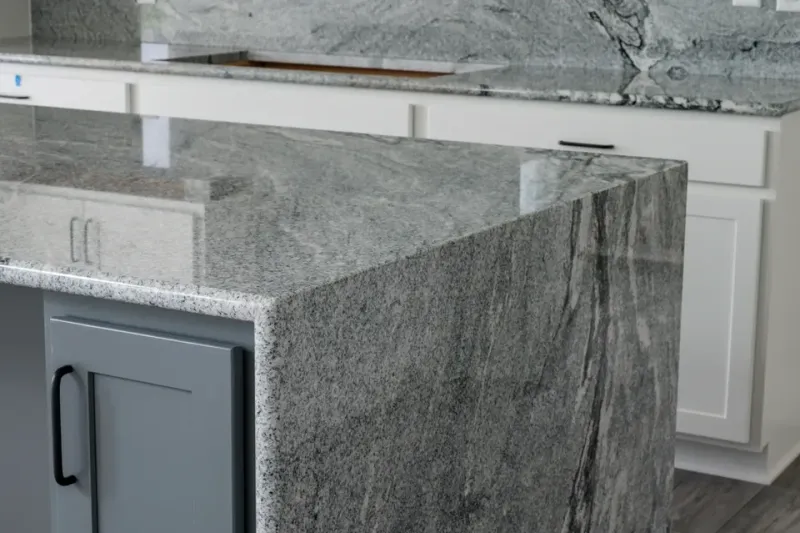
Photo: ShiroMTUN, CC BY-SA 4.0, via Wikimedia Commons
Showroom worktops lead charmed lives. Nobody sets a roasting tin straight from the oven onto them, nobody sloshes a glass of red across the island at nine on a Saturday, and nobody's teenager does homework on them with a leaking biro. Then the kitchen gets fitted and real life begins.
So before you fall for a slab under flattering spotlights, do some honest stocktaking. The right surface isn't the hardest or the priciest — it's the one that forgives what you'll genuinely do to it.
Begin with an audit of your own habits
Answer these honestly, ideally while standing in your current kitchen:
- Do you own a trivet, and do you actually use it, or is it still in the drawer from the last house?
- Do you chop straight on the worktop when the board is in the dishwasher?
- Is there flour, oil or coffee involved in most of your cooking?
- Does anyone in the house do crafts, homework or electronics repairs at the island?
- How quickly do you wipe up spills — or do you find them the next morning?
- Are you happy oiling a surface twice a year, or does that sound like a chore you'll abandon by February?
Your answers point to one or two sensible options. Everything else is window shopping.
Quartz: the low-drama all-rounder
Engineered stone — roughly nine parts ground quartz to one part resin binder — is the default choice in most UK kitchen showrooms, and for good reason. It's non-porous, so no annual sealing, and it shrugs off red wine, turmeric, vinegar and citrus if you wipe them up reasonably promptly. Colours are consistent, which matters if your run is being made in more than one piece.
The weak point is heat. The resin can scorch, discolour or craze under a pan straight off the hob, and a hot baking tray left to cool on the surface is exactly how warranties get voided. Use a trivet, every time, without exception.
Budget: expect roughly £250–£450 per square metre fitted, depending on brand, thickness and edge detail. Ask which range and which slab size the quote is based on — "quartz" covers everything from budget imports to premium veined designs, and the difference in look is enormous.
Laminate: the value pick that grew up
Modern laminate has quietly become good. Matt, textured finishes that mimic stone convincingly, decent heat and scratch resistance, and a price that leaves room in the budget for the extractor you actually want. It's quick to supply too — often a week or two, against three or more for stone.
The vulnerabilities are the seams and the edges. Water creeping into an unsealed joint around a sink is what kills laminate, and a hot pan on a joint can lift the surface. Specify sealed edges, a properly routed sink cut-out and an upstand or splashback where water splashes. With those details done well, laminate in a busy family kitchen is a sensible, unfussy choice.
Budget: around £60–£160 per linear metre, supply and fit, which makes it the obvious pick for rentals, first homes and anyone who'd rather spend the money on appliances.
Solid wood: a commitment, not just a surface
Oak, iroko and walnut bring warmth that no engineered material quite replicates, and they suit period properties and butler sinks beautifully. They also ask something of you: regular oiling, prompt mopping of water, and acceptance that knife marks, dents and a patina will accumulate. Water rings are the classic complaint, usually from a wet mug or a draining board left damp.
The trade-off is repairability. A solid wood worktop can be sanded and re-oiled, so a decade of abuse can be erased in an afternoon. Very few surfaces can say that.
Budget: roughly £150–£350 per square metre. Factor in oil and a couple of hours a year, forever.
Sintered stone: engineered to shrug things off
Sintered or ultra-compact surfaces — sold under names such as Dekton, Neolith and Lapitec — are pressed and fired like porcelain. They handle heat, sunlight and scratches far better than quartz, and they're non-porous. If you're the person who puts the pan down without thinking, this is the forgiving option.
The caveats are practical rather than cosmetic. Edges can chip, and a chip is harder to disguise than in quartz. Thin 12mm slabs with mitred edges look superb but demand an experienced fabricator and installer, and the material can feel and sound harder underfoot and under crockery. Lead times are usually longer.
Budget: typically £300–£600 per square metre fitted, often more for book-matched veining or waterfall ends.
Stainless steel: restaurant logic, domestic reality
Hygienic, heat-proof, seamless around a welded sink, and it ages rather than degrades. Brushed finishes hide fingerprints better than polished ones. What it won't do is stay pristine — scratches appear within weeks and become part of the character. If you bake, butcher or simply like the professional-kitchen look, it's brilliant. If visible marks would bother you daily, it isn't.
Budget: from around £400 per square metre, plus fabrication for welded sinks and cut-outs.
The questions to ask before you sign
- Which exact product, brand and slab size is this quote for, and can I see a physical sample at home in my own light?
- Who templates — your fitter or the supplier — and is it a digital or plywood template?
- What is the lead time in weeks, and what happens to my price if the fit date slips?
- Are sink and hob cut-outs included, and how much per cut-out if not?
- What voids the warranty? Heat, chips, chopping directly on the surface, harsh cleaners?
- Where will the joins fall, and will the veining be book-matched across them?
- What's included for upstands, splashbacks, tap holes, and removal of the old worktop?
The bottom line
If you cook hard and clean lazily, sintered stone or stainless steel will be kinder to your nerves. If you're careful with heat and want the widest choice of looks, quartz is the safe middle ground. If the budget is finite and the timeline is tight, a well-detailed laminate will serve you well for years. And if you want a surface that grows old with the house and can be brought back to new, choose wood and accept the maintenance as part of the deal.
Match the surface to the life happening on top of it, and you'll still like it in ten years' time.