The Gravy-Proof Kitchen: Stress-Testing Your Layout Against a Proper Sunday Lunch
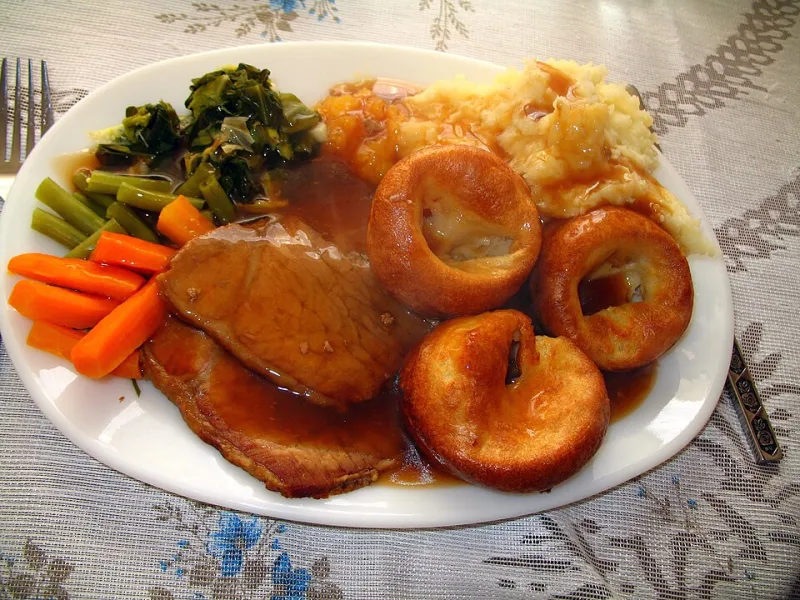
Photo: by robbie jim, CC BY 2.0, via Wikimedia Commons
Most kitchen showrooms are designed for admiring, not cooking. You open a drawer, nod at the quartz, and picture something calm involving a glass of wine. Then Sunday arrives: a joint of beef or a chicken, a tray of roast potatoes, Yorkshire puddings, three pans of vegetables, gravy, and a family who all want to be in the room at once. That is when your layout either earns its keep or quietly falls apart.
A Sunday roast is not just dinner. It is a weekly logistics exercise, and it exposes more design flaws than any showroom checklist. Before you commit to a new kitchen, run the roast test. Not in your head — with a roasting tin, a heavy pan and a plate of imaginary Yorkshire puddings.
Start with the oven, not the island
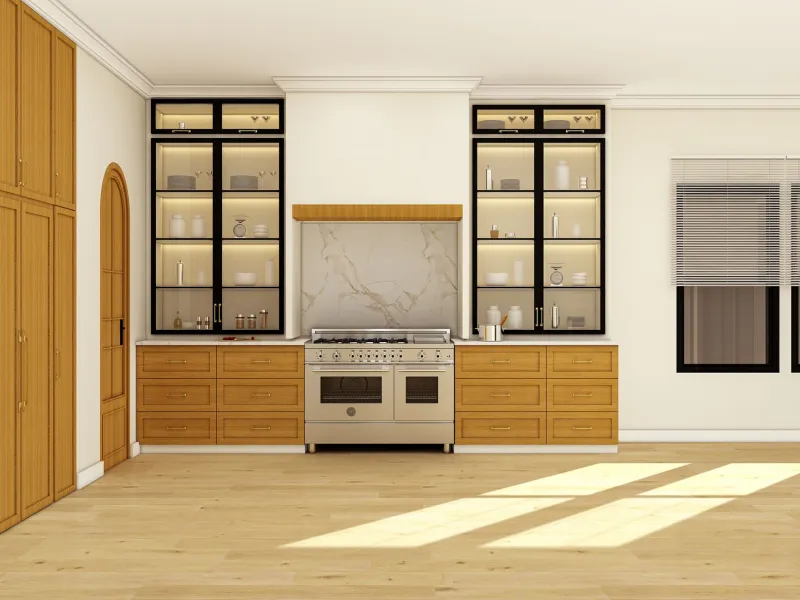
The oven is the engine of Sunday lunch, yet it is often chosen on looks and a tempting price. Think about capacity in real terms: can you fit the meat, the potatoes and a tray of Yorkshire puddings on separate shelves without playing Tetris? A wide oven with a decent internal height is more useful than a fashionable compact one if you regularly cook for four or more.
Check how the door opens, too. A drop-down door gives you somewhere to rest a hot tray, but it also eats floor space in a narrow galley. Side-opening doors can be kinder in tight corners, though you need clearance to swing them. If you are considering a double oven, ask whether the second cavity is genuinely useful or just a place to store baking trays.
And do not forget the resting phase. The meat needs to sit somewhere warm while the potatoes finish. That might be a warm drawer, a low oven setting or simply a plate under foil — but the kitchen needs a plan for it.
The hob is a juggling act
On a normal Tuesday, two rings are enough. On Sunday, you need somewhere for the gravy, the peas, the carrots, the cauliflower cheese and possibly a pan of spuds for mashing. Four burners can feel generous until you put a large pan on one and realise the handles block the next two.
Induction hobs are brilliant for speed and easy cleaning, but pan size and placement matter. Some models have flexible zones that bridge two rings for a roasting tin or a large saucepan. That can be a genuine help on roast day. If you are sticking with gas, think about the clearance around the largest pan you own, not the smallest.
Also look at the worktop either side of the hob. You need landing space for hot pans, not just a decorative jar of utensils. A hob crammed against a wall or a tall cabinet is a recipe for awkward lifting and elbow collisions.
Somewhere to put the meat down
Carving is where a lot of kitchens quietly fail. You need a stable surface, a board with a juice groove, and enough room to work without a queue forming behind you. Ideally, the carving spot sits between the oven and the table, with a clear route and no one opening the fridge behind your elbow.
A generous stretch of worktop — around 60cm or more — makes a real difference. So does lighting. Overhead downlights can cast shadows exactly where you need to see, while under-cabinet lighting or a pendant over the prep area can make the job safer and less theatrical.
If space is tight, a pull-out carving board or a section of worktop that can be cleared in seconds is better than a beautiful but permanently cluttered dresser. The roast does not care about styling. It cares about elbow room.
Steam, smoke and the extractor
Sunday lunch is a humid business. Boiling pans, an open oven door and a hot dishwasher all add moisture to the air. In an open-plan kitchen, that steam can drift into the sitting room and leave windows running with condensation.
An extractor hood that actually vents outside is usually the gold standard, but ducting is not always possible in a renovation. Recirculating hoods can help with grease and odours, though they will not remove moisture in the same way. If you are planning an open-plan space, talk to your fitter about extraction early, before the ceiling is closed up.
Smoke is the other issue. A high-temperature roast can set off the smoke alarm just as guests arrive. Good extraction, a properly sealed oven and a window that opens easily all help. So does resisting the urge to site the oven directly beneath a low cupboard that traps hot air.
Warming without a conga line
The classic Sunday problem is timing. The meat is rested, the potatoes are done, the gravy is on, and the plates are cold. A warming drawer is lovely if you have the space, but it is not the only answer. A low oven, a plate stack on a radiator-free surface or a hostess trolley can all do the job.
What matters is having a designated warm zone that does not block the main cooking route. If every hot dish has to travel across the prep area while someone is draining carrots, you have designed a collision. Keep the warming spot close to the serving plates and away from the sink.
The sink-to-oven route
Think about the whole journey: peel, chop, boil, drain, roast, rest, carve, serve. The sink is the start and the finish, because that is where the roasting tin ends up. If the sink is at the opposite end of the room from the oven, you will carry heavy, hot and wet things further than you need to.
The ideal is a route that does not cross the carving area or the main walkway. A bin near the prep zone helps, as does a dishwasher that can take a roasting tin without a game of architectural gymnastics. If you are planning a new layout, walk the route with a full pan. It sounds daft, but it is the cheapest design test you will ever do.
Use the roast as your checklist
Before you sign off a design, imagine Sunday lunch in it. Put a roasting tin on the worktop. Open the oven door. Stand where you would carve. Ask someone to walk behind you with a pan of water. See whether the extractor, the bin and the fridge all compete for the same square metre.
A kitchen can look wonderful and still be hard work. The best ones make the weekly ritual feel easier without shouting about it. If your layout can handle the gravy, the steam and the family crowd, it will handle almost anything else the week throws at it. That is the standard we aim for at Crown Kitchens: design-led, yes, but fitted around the way a Sunday actually unfolds.