Snagging, Switching On and Signing Off: A Calm Guide to Kitchen Handover
The last five days of a kitchen installation have a strange reputation. On paper, the room is nearly done. In reality, it can feel like the project has entered its most untidy phase: half the appliances are still wrapped, the silicone is fresh, and there is a pile of cardboard where the bin should be. A calm handover is not about everything being perfect on day one. It is about knowing what should be finished, what should be tested, and what should be written down before the van pulls away.
The room should start to make sense again
By the final week, the big decisions are behind you. The layout is fixed, the units are in, and the worktop has been templated and fitted. What remains is the detail — and detail is where a good fitter earns their keep.
You should see plinths going on, upstands and splashbacks being sealed, handles being aligned and appliance fronts being adjusted. Doors should sit level, drawers should run smoothly, and filler panels should look deliberate rather than like an afterthought. If the room has a breakfast bar or a peninsula, check the overhang and the support underneath. If there is a corner cupboard, make sure the internal carousel or pull-out works without catching.
This is also the point to look at the boring bits that affect daily life: can the oven door open fully without hitting the opposite run? Does the dishwasher drop down without clouting the plinth? Is there enough clearance around the bin drawer? A handover walkthrough is much easier when you are checking how the room works, not just how it looks.
Commissioning is not the same as plugging in
A new appliance working on the day is not quite the same as a new appliance being commissioned properly. In the final week, your fitter or electrician should run through the ovens, hob, extractor, dishwasher, fridge and any boiling-water tap or integrated coffee machine. For a gas hob, the relevant Gas Safe registered engineer should be the one confirming it is connected and working safely. For electrical work, ask for the relevant certificate or building regulations notification where it applies.
A good handover includes a demonstration, not just a shrug towards the manuals. You should be shown how to set the clock, switch between oven functions, pair an app if there is one, change the filter on the extractor and isolate the appliance if you need to. Check that the extractor actually extracts — or that a recirculating model has been set up with the correct filter. Run the dishwasher through a short cycle. Let the fridge reach temperature before you fill it.
Write down the model and serial numbers before they disappear behind a plinth or into a cupboard. Register the warranties in the final week if the fitter has not already done it for you. Keep the manuals together in one folder, ideally with the installation certificates and any care instructions for worktops, sinks and taps.
Test the things you will use every day
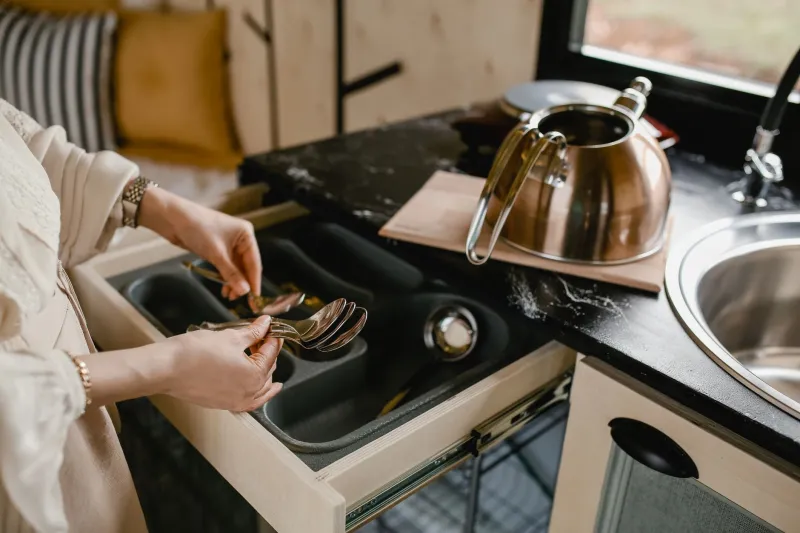
A calm handover is built on small, boring tests. Open and close every door and drawer. Not just once, and not just gently. Use them as you would on a normal morning: pull the cutlery drawer right out, close the pan drawer with a bit of weight in it, check that the soft-close mechanism catches properly. Look for doors that rub against each other or handles that meet in the middle when two people open adjacent units.
Run the tap hot and cold. Fill the sink and let it drain. Check under the sink for drips, and look at the waste pipe where it disappears into the wall or floor. If you have an integrated washing machine or dishwasher, run a cycle and check for leaks at the end. Wipe a cloth around the base of the tap and the underside of the worktop.
Silicone needs time to cure, so try not to scrub it on day one. The same goes for newly sealed worktops and upstands. Ask what the recommended curing time is, and follow it. It is a small wait that protects the finish.
Snagging: make the list before the final payment
Snagging is not a sign that something has gone wrong. It is the normal process of catching the last small defects before everyone moves on. Walk the room with the fitter and a roll of low-tack tape. Mark chips, scratches, uneven gaps, doors that need adjusting, silicone that needs tidying and anything that does not match the agreed plan. Take photographs as you go.
A good fitter will want the list in writing. Agree which items will be fixed straight away, which need a return visit, and when that visit will happen. If your contract includes a retention or a final payment on completion, link it to the agreed snagging list rather than withholding money for vague reasons. The final payment is not a bargaining chip; it is the point at which the job is genuinely complete.
Ask for the handover pack before the last payment goes out. That should include appliance manuals, warranty details, any gas or electrical certificates, care instructions for the worktop and sink, and a note of any paint or stain colour used on plinths and trims. If spare tiles, worktop offcuts or touch-up pens exist, ask where they are. They are much easier to find now than in two years.
The old kitchen has to go somewhere
This is the question that often gets left until the final day: what happens to the old units? In most full installations, removal and disposal are part of the job, but it is worth confirming exactly what is included. Ask whether the old kitchen is being taken away by a licensed waste carrier and where it is going. If you are keeping anything — a useful cabinet for the garage, the old sink, a favourite shelf — say so before it goes in the skip.
If the old units are still in decent condition, local reuse charities and community groups may be glad of them. Otherwise, your council’s bulky waste service or a licensed waste carrier is the responsible route. Do not let a well-meaning van driver promise to “get rid of it” without knowing where it will end up. Fly-tipped kitchen units are a nuisance, and the paperwork matters.
After the van goes
A calm handover does not end when the last tool is packed away. Book the follow-up snagging visit before the fitter leaves, even if it is only pencilled in. Keep a note of who to call for what: the installer for adjustment, the appliance manufacturer for warranty issues, the worktop fabricator for care advice. Give the room a proper clean once the fine dust has settled, and keep it ventilated for a few days.
Then live in it for a week before you decide anything else needs changing. Some things only reveal themselves when you make a cup of tea at 6am or cook a proper Sunday lunch. A kitchen that has been handed over properly gives you the space to notice those things — and the confidence that someone will still answer the phone if something is not right.